
Contract & Payment Terms: How Money Should Actually Move on an Alberta Construction Project
By Afroz Shaik, Founder, AM Builders | October 5, 2026 | 8 min read

Quick Answer
Before signing a construction contract in Calgary, Airdrie, Chestermere, or Cochrane, confirm: (1) whether it's fixed-price or cost-plus, (2) exactly how change orders get priced and approved, (3) a payment schedule tied to completed milestones, (4) a deposit within Alberta's prepaid contracting limits, (5) an itemized scope of work with material allowances, and (6) a final-payment process tied to inspection sign-off and lien release.
- If any of these six are missing from the written contract, they don't exist — verbal promises don't hold up when a dispute happens.
- A contractor who welcomes these questions is showing you how they operate, not just what they charge.
1. Fixed-Price vs. Cost-Plus Contracts
A fixed-price contract sets one total number for a defined scope, putting the risk of cost overruns on the contractor. A cost-plus contract bills actual costs plus a fee, putting more of that risk — and more visibility into real spending — on the homeowner. Neither structure is wrong, but the contract needs to say plainly which one you're signing.
Tip
The pricing model isn't fine print — it's who's holding the risk if the job runs long.
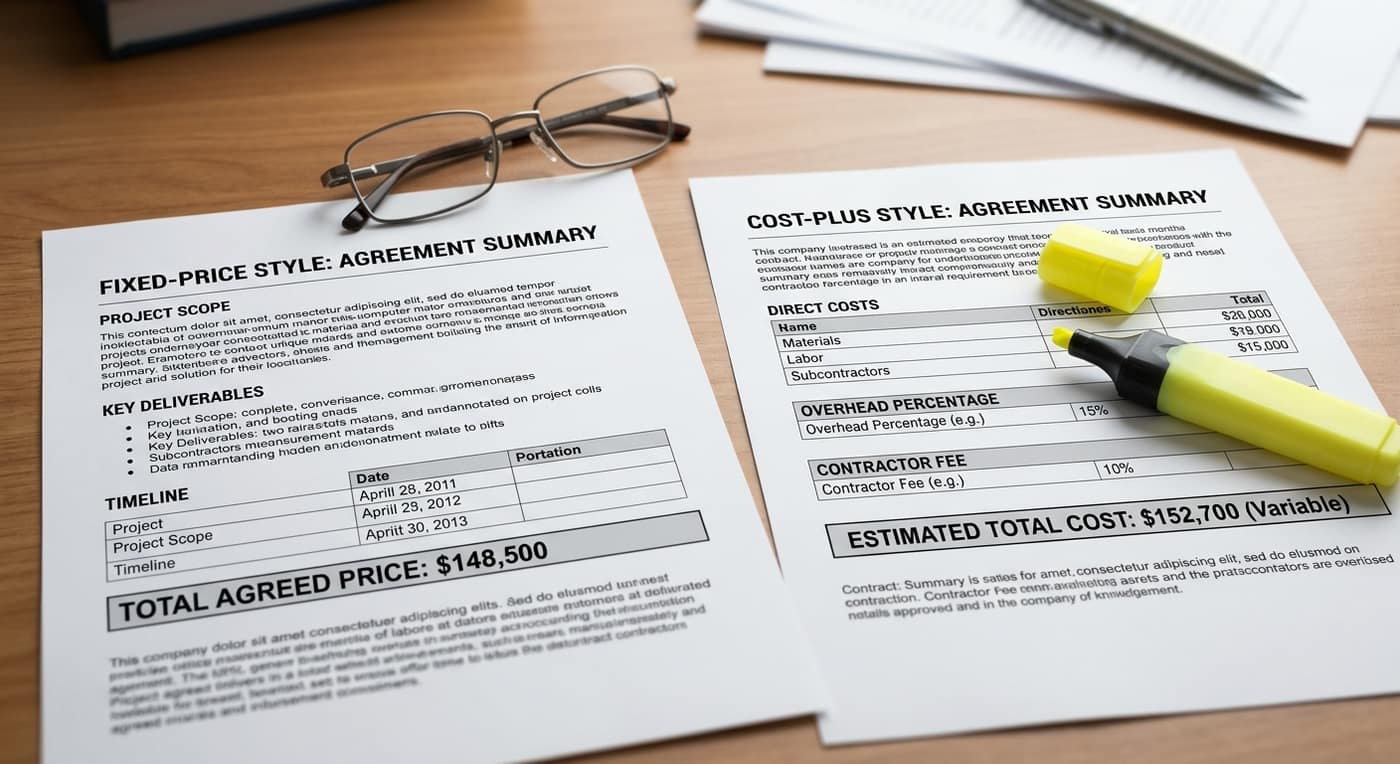
Ask directly which model you're being offered and why, and make sure it's stated in writing rather than implied by how the estimate looks. This decision should be made by a contractor who's already cleared the basics — confirm they're a licensed and insured business before pricing structure even becomes the conversation.
Tip
"We'll figure out the pricing model as we go" is not a pricing model — it's an open invitation to disagree later.
2. Change Orders: Pricing & Approval
Almost every renovation encounters at least one surprise — old wiring behind a wall, a load-bearing beam nobody expected — and how that surprise gets priced and approved is exactly what a change order process is for. Without one, "extra work" becomes a vague argument at the final invoice.
Tip
Surprises are normal in construction. Undocumented surprises are how budgets quietly double.

Ask how change orders are documented, priced, and signed off before extra work begins — not after. This matters most exactly where structural changes and engineering are involved, since those surprises tend to be the most expensive and the most likely to get started on a verbal "just go ahead."
Tip
If the extra work started before the change order was signed, you've already lost your negotiating position.
3. Payment Schedules & Milestones
A payment schedule tied to completed, verifiable milestones — not calendar dates — keeps both sides accountable: the contractor gets paid for progress actually made, and the homeowner never pays significantly ahead of the work in the ground.
Tip
Pay for progress you can see, not progress you're promised.
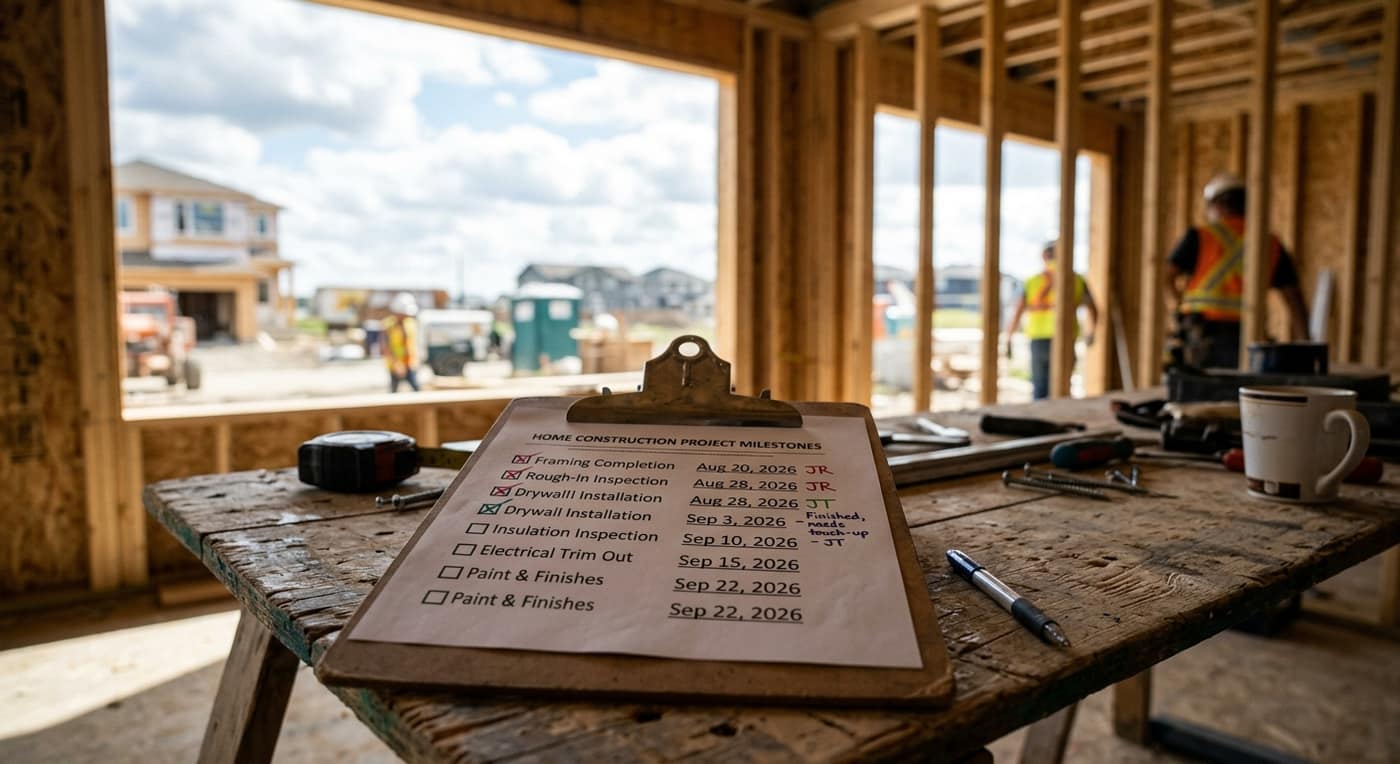
Ask what each payment is tied to — framing complete, rough-in inspection passed, drywall complete — and make sure those milestones are specific and verifiable. This pairs naturally with confirming permit approval and inspection sign-offs, since the strongest milestones are ones an inspector has already confirmed, not just ones the contractor says are done.
Tip
"Trust me, it's basically done" is not a payment milestone.
4. Deposit Limits & Prepaid Contracting Rules
Alberta's prepaid contracting rules exist specifically to limit how much a contractor can collect before work actually starts, because large upfront deposits are one of the most common patterns in residential construction fraud.
Tip
A deposit should fund the start of your project — not someone else's.

Ask what the deposit is, why that amount, and whether the contractor holds a Prepaid Contractor License if the amount requires one. This is one more thread that ties back to the same business licensing check that should already be on your list before any money changes hands.
Tip
A request for 50% down before a single wall comes down should make you slow down, not speed up.
5. Scope of Work Specificity
"Renovate basement" is not a scope of work — it's a headline. A real scope itemizes what's included, what materials and finishes are allowed for, and what happens if you want to upgrade beyond the allowance, so there's no ambiguity about what the price actually buys.
Tip
Vague scope today becomes an expensive argument at the final walkthrough.
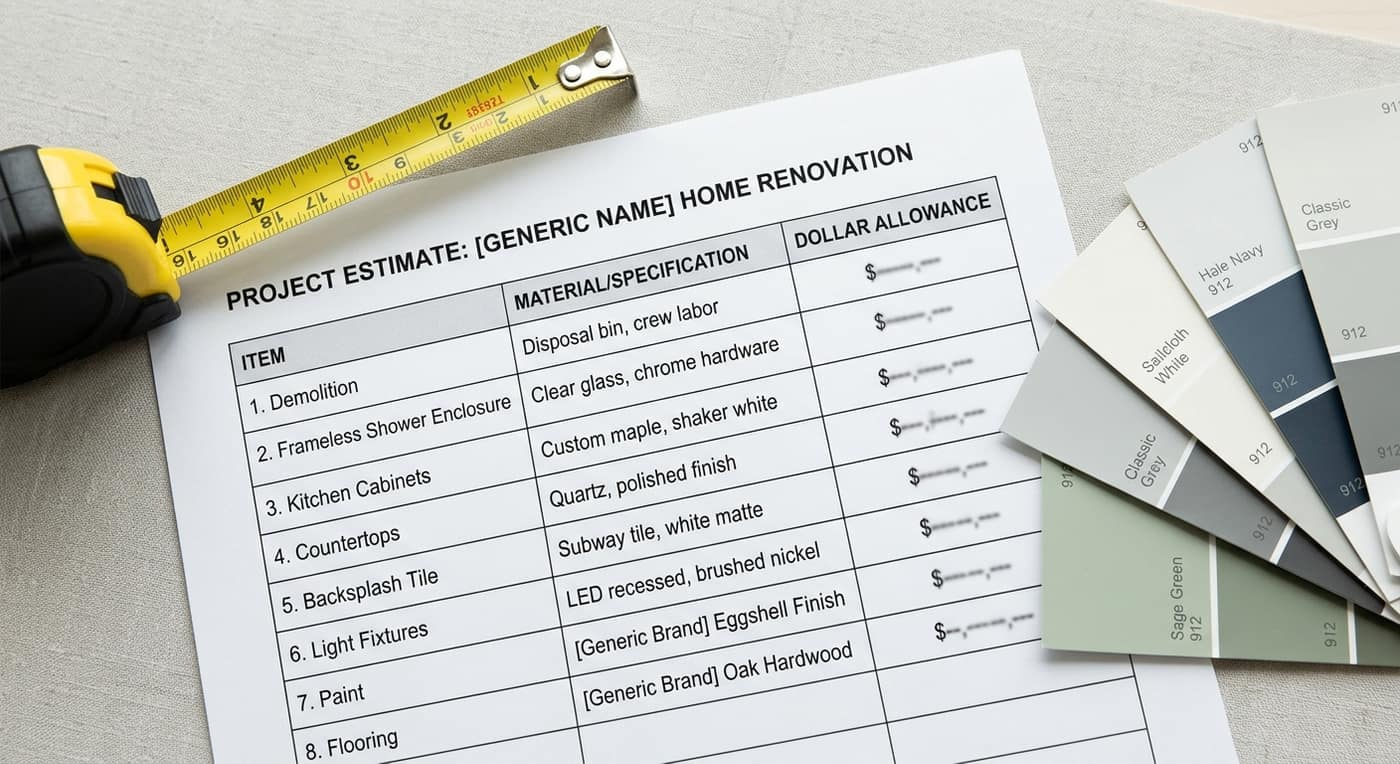
Ask for a line-item scope of work with specific allowances — flooring, fixtures, cabinetry — rather than a one-paragraph estimate. This should also spell out material specifications like insulation values and energy code compliance, since "code-compliant" needs to mean something specific in the contract, not just a general assurance.
Tip
If you can't tell from the contract what finish you're getting, neither can the contractor when it's time to install it.
6. Final Payment, Lien Releases & Closeout
The final payment is your last real point of leverage on a project — releasing it before inspections pass, deficiencies are fixed, and lien releases are collected removes any incentive for the contractor to come back and finish the last five percent.
Tip
Once the final payment clears, so does most of your leverage.

Ask for a deficiency walkthrough, final inspection sign-off, and signed lien releases from subs and suppliers before releasing final payment — this directly connects to the Builders' Lien Act holdback requirements covered in our legal and licensing guide. It's also worth confirming closeout timing against the project's overall site schedule, so "final payment" doesn't get rushed just to hit a calendar date.
Tip
A rushed closeout benefits the contractor's schedule far more than it benefits your finished home.
Don't Sign Anything Until You've Checked These 27 Boxes
Contract & financial terms are just one of seven categories in our full contractor vetting checklist. Get the complete, free guide — or talk to a team that already builds this way.
AM Builders — Basement Development, Home Renovations, New Home Construction & Commercial Construction across Calgary, Airdrie, Chestermere & Cochrane.
This article is for general educational purposes and reflects common Alberta contracting practices as of September 2026. It is not legal or financial advice. Always have a construction contract reviewed by a licensed lawyer before signing, and confirm current prepaid contracting rules with Service Alberta.
Frequently Asked Questions
What's the difference between a fixed-price and cost-plus contract?
A fixed-price contract sets one total price for the defined scope of work, so the contractor absorbs the risk of cost overruns. A cost-plus contract bills actual costs (labour, materials, subs) plus a fee or markup, so the homeowner absorbs more of the cost risk but gets more transparency into actual spending. Neither is inherently better, but the contract should state clearly which one you're signing.
How much deposit can a contractor legally ask for in Alberta?
Alberta's prepaid contracting rules restrict how much a contractor can collect upfront before work begins, and contractors collecting deposits above certain thresholds may need a Prepaid Contractor License. A request for 50% or more before any work starts is a common red flag; payments tied to completed milestones are the safer standard.
How should change orders be handled during a renovation?
Every change to the original scope of work should be documented in a written change order describing the change, the price impact, and the schedule impact, signed by both parties before the extra work begins. Verbal-only change orders are one of the most common sources of payment disputes at the end of a project.
What should be included in a detailed scope of work?
A detailed scope of work itemizes the tasks, materials, brands or model numbers where relevant, and dollar allowances for finishes like flooring, fixtures, and cabinetry, rather than a single vague line item like "renovate basement." This is what a fixed price or cost-plus estimate should be built on.
When should the final payment be released to a contractor?
Final payment should generally follow final inspection sign-off, a completed deficiency walkthrough, and confirmation that the statutory holdback period and lien release process required under Alberta's Builders' Lien Act have been satisfied. Releasing full payment before these steps are complete removes your leverage to get outstanding items fixed.